Ewe & Lamb Mix
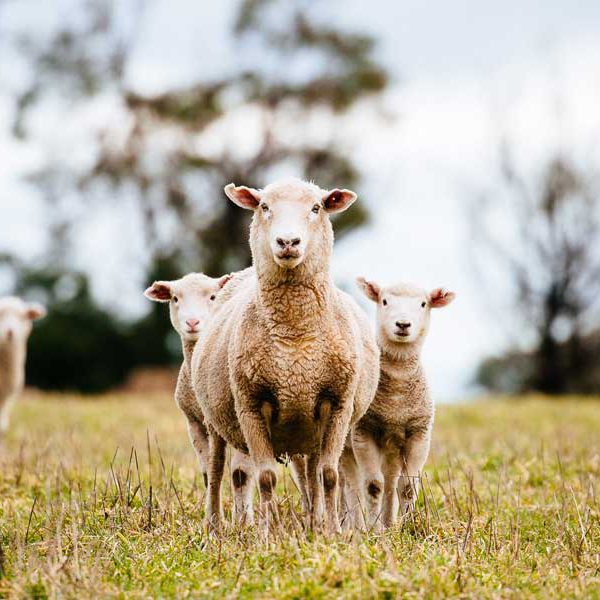
Ensure your sheep have the best feed sources available with specially formulated grain mixes from Reid Stockfeeds.
Our great-tasting Ewe & Lamb blend contains a balance of key ingredients to encourage healthier ewes pre and post lambing.
Whether you are on green feed or dry feed, this product can be tailored to suit your requirements.
Or Phone Us Today on (1300) 7343 3333
Ewe & Lamb Feed Specifications
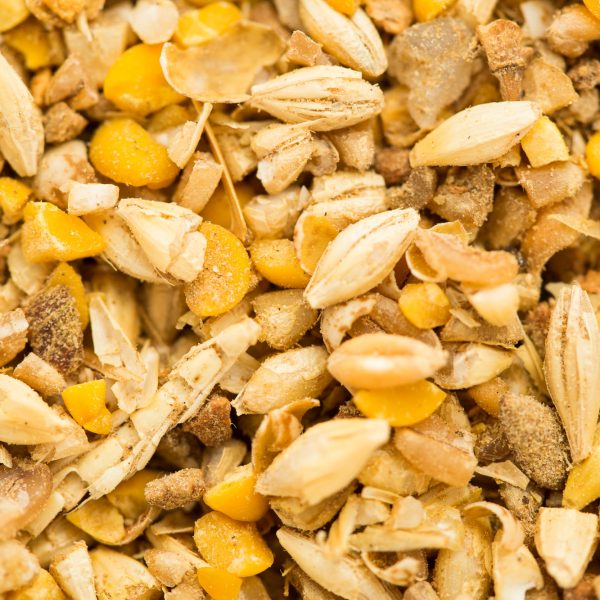
This multi-purpose sheep feed is selected from cereal grains, legumes, salt, limestone, magnesium sulphate, vitamin/ mineral premix, canola oil Molafos, dicalcium phosphate, sodium bicarbonate, sodium bentonite, magnesium oxide, magnesium sulphate, acid buff, vitamin/ trace minerals premix, Fylaxflo and Eskalin (optional).
Our Ewe & Lamb Mix contains Lasalocid Sodium 33mg/kg (as Bovatec).
Bovectec is a rumen modifier that works to shift rumen fermentation patterns to improve feed conversion efficiency and increase average daily gains.
Lasalocid Sodium has also been shown to decrease the incidence of faecal shedding of coccida (Eimeria Spp.) in sheep.
Eskalin is an optional addition to reduce acidosis but you will need to provide us with a vet prescription.
This product does not contain restricted animal material.
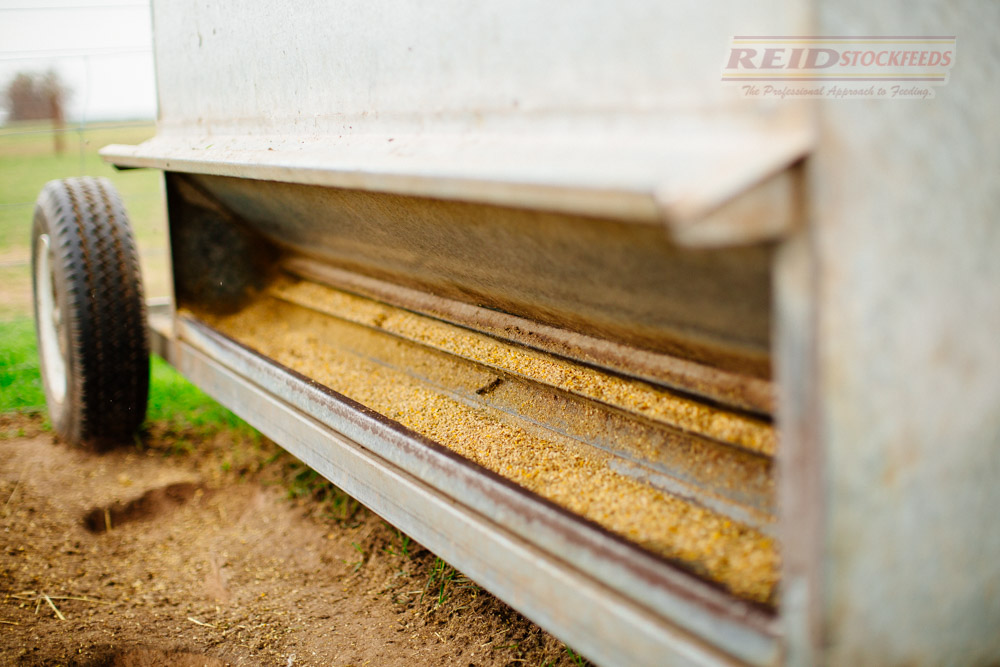
Reid Stockfeeds’ Ewe & Lamb feed is ideal for trail feeding, trough feeding, creep feeders or in feeders where intake can be controlled.
to be added
| GRAMS AS FED OF EWE & LAMB TO FEED/HEAD/DAY, BASED ON 50KG LIVEWEIGHT | ||||
| DRY FEED | GREEN FEED | |||
| PASTURE/ FODDER DIGESTIBILITY | <65% | >65% | ||
| SINGLES | TWINS | SINGLES | TWINS | |
| DRY SHEEP | 250 | 250 | ||
| MID PREGNANCY | 400 | 500 | ||
| LATE PREGNANCY | 500 | 600 | 200 | 300 |
| EARLY LACTATION | 700 | 800 | 400 | 500 |
- For 60kg Liveweight ewes, multiply the recommend amount by 1.2
- For 70kg Liveweight ewes, multiply the recommended amount by 1.4
Available in 20kg, 800kg Bulka bags and in Bulk
- Bags: Store in a vermin free, cool dry place, protected from direct sunlight.
- Make sure silo is vermin and insect free and cleaned out regularly.
- Best within 12 months of manufacture date.
- This product has been formulated specifically for sheep as described. Feeding horses, other equines and dogs may be fatal. The manufacturer accepts no responsibility if this feed is not fed in accordance with recommendations.
- Do not use in lactating ewes where milk or milk products may be used for human consumption.
- This product does not contain restricted animal material.
20 kg + Bulka Bags
- 9L Grayland Rd, Cobden 3266
Bulk
- Goulburn Valley Region 1706 Bendigo-Murchison Rd, Colbinabbin 3559
- Gippsland Region 68 Waterloo Rd, Trafalgar 3824
- South West Region 9L Grayland Rd, Cobden 3266
Raise A Healthier Flock
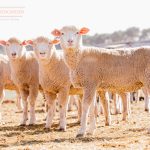
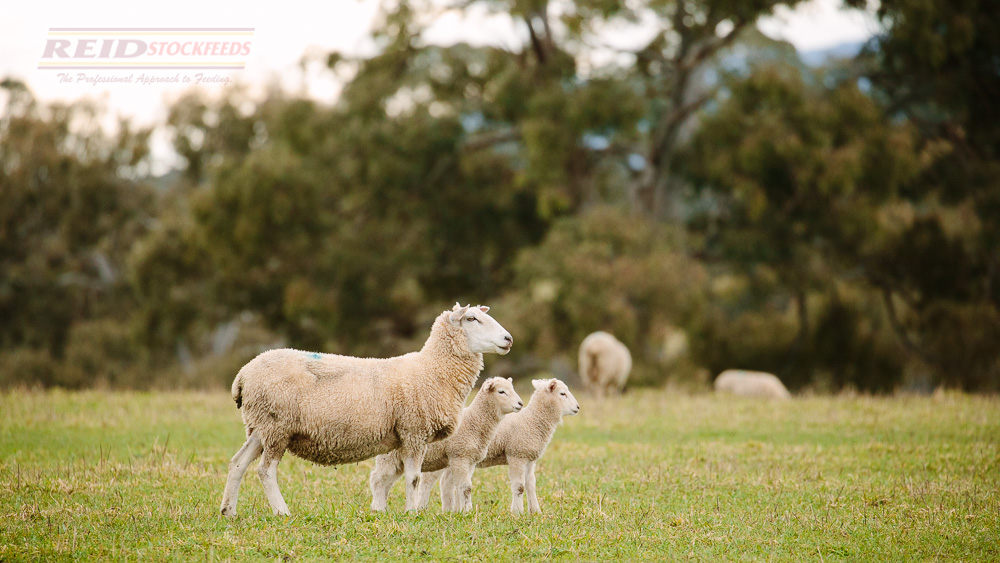
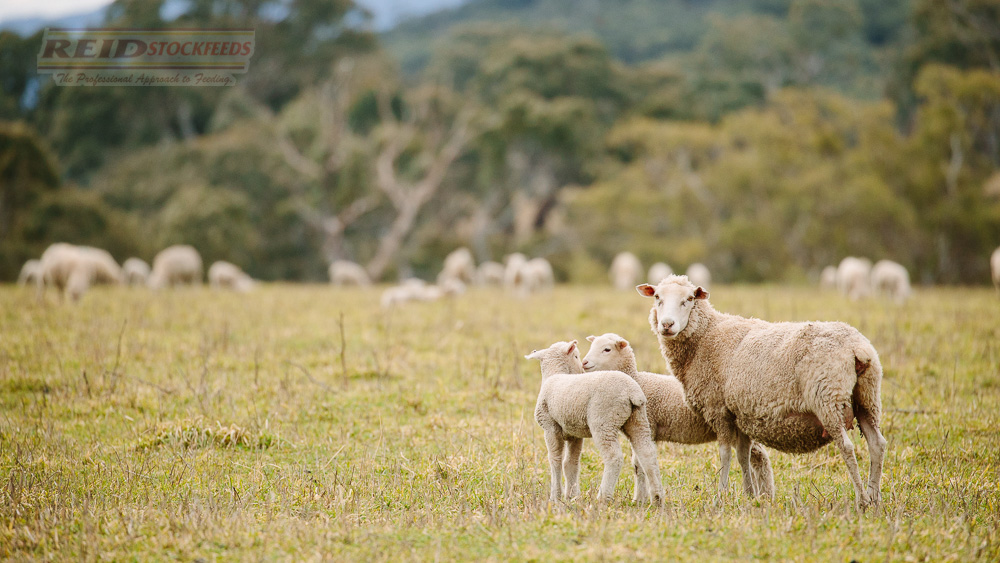
Our highly nutritious, multi-purpose Ewe & Lamb feed is suitable for feeding adult ewes, replacement ewes and ewes with lambs at foot. This product can be fed to sheep in conjunction with ad lib fodder (pasture, hay or silage).
Why Feed Reid?
Packed with palatable grains and protein sources, this feed contains a balance of marco and trace minerals, vitamins and buffers.
As well as being suitable for rams and wethers, Ewe & Lamb Mix is a convenient solution to reduce the occurrence of pregnancy toxaemia in ewes.
Ewe & Lamb Feeding Directions
- Introduce grain gradually to allow for the rumen and microbes to adapt.
- Start at 100g per head per day and increase by 50 g/ head/ day until reaching the desired feed rate.
Feeding Rates
Recommend feed rates vary depending on fodder and forage quality, stage of cycle and liveweight.
However, we suggest the following:
- Feed up to 2% of liveweight for late gestation, early lactation in twin bearing ewes
- Feed 0.5% of live weight for maintenance of dry stock
Feeding Advice
- Always provide your sheep with access to clean, fresh drinking water.
- Make any changes to the diet gradually, to allow rumen adaptation.
- Never introduce grain to starving/hungry animals.
- Provide a source of long fibre roughage to optimise rumen function.
- For further information, speak to one of our qualified nutritionists.
Additional Information
Water
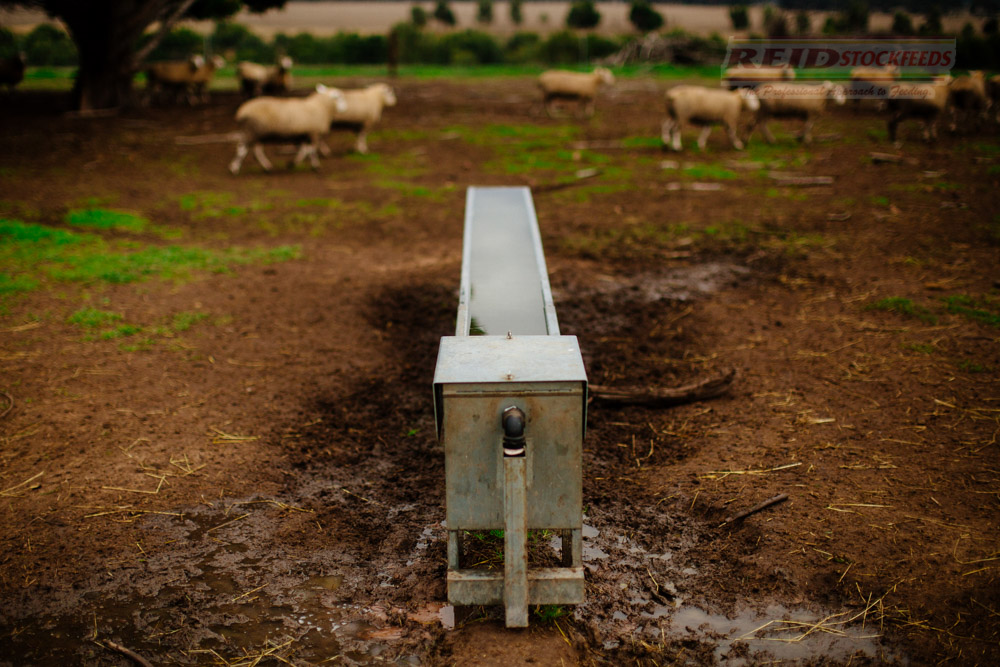
- Troughs need to supply clean, fresh and cool water.
- Dirty, stagnant and hot water will decrease voluntary water and feed intake, which can in turn reduce feed conversion efficiency (FCE).
- Troughs need to be designed so that they are easy to clean out (note: this should be done daily). They should have a high flow rate, with relatively small surface area to minimise dust and manure contamination.
- It is also advisable that a minimum of three days water be on hand (stored in a tank) in case of a pump break down.
- If stock do not have access to water for an extended period, their feed intake can drop. Grain may need to be reintroduced to the diet gradually.